Heritage Evidence Supporting a Planning Appeal: Northwold, Norfolk
East Anglian Heritage was commissioned to prepare heritage evidence supporting a planning appeal relating to land off Little London Road, Northwold, Norfolk.
The case required a detailed Heritage & Setting Impact Assessment, followed by a formal Appellant’s Heritage Response addressing the Council’s Statement of Case.
This work formed part of the appeal documentation submitted to the Planning Inspectorate.
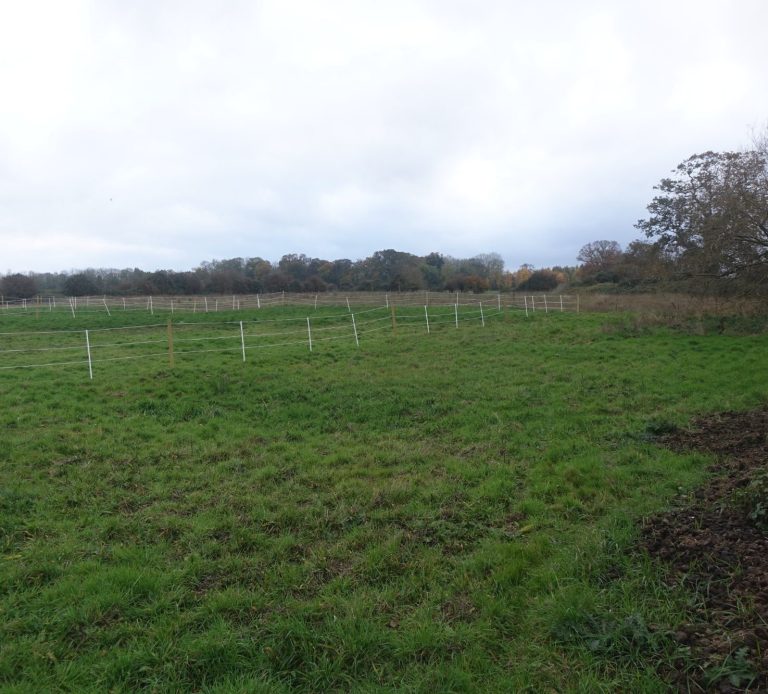
View over the land in question of the appeal at Northwold, Norfolk © East Anglian Heritage.
Heritage Planning Appeal supporting evidence.
The Heritage Context
The appeal site lies on agricultural land on the edge of Northwold, close to the Northwold Conservation Area.
The significance of the conservation area derives primarily from:
- The historic clustered settlement form;
- The legibility of the historic junction node at High Street, Hovells Lane and Little London Road;
- The architectural grouping of listed and notable historic buildings within the village core.
While the appeal site forms part of the wider rural setting, it lies outside the conservation area boundary.
The Proposal
The proposed development involved:
- A small stable block;
- A 130m² stable pad;
- Equestrian use of the wider field.
The structure occupies approximately 0.5% of the 2.5-hectare field, with the majority of the site remaining open pasture.
The proposal therefore represents very limited built development within a rural landscape context.
The Heritage Challenge
The Council’s case argued that the field forms part of the rural “backdrop” to the conservation area and that development could affect its setting.
However, the Council’s statement did not identify which specific heritage attributes depend upon this field, nor how the proposal would materially affect the conservation area’s character or appearance.
The appeal therefore required a clear and structured analysis of:
- The actual significance of the conservation area;
- The contribution made by the appeal site;
- The extent of change introduced by the proposal.
Archaeological Context
The Heritage Impact Assessment identified post-medieval small-scale quarrying earthworks within the site.
These low-relief archaeological features remain vulnerable to gradual damage through arable cultivation, which has historically truncated similar remains in the surrounding area.
The proposed equestrian use would instead:
- Establish permanent pasture;
- Remove plough-based attritional damage;
- Stabilise surviving earthworks in situ.
While modest, this represents a genuine heritage conservation benefit.
Heritage Planning Assessment
The assessment concluded that:
- The proposal lies outside the conservation area;
- The scale of development is very limited;
- The structure is rural in typology and form.
If any heritage harm were identified, it would fall at the very lowest end of the less-than-substantial harm spectrum.
This limited impact must be weighed against the proposal’s benefits, including;
- Appropriate rural land use;
- The absence of residential encroachment;
- Improved management of archaeological remains.
EAH Insight
Planning appeals require clear, structured heritage reasoning.
In this case the heritage evidence demonstrates how:
- Defining heritage significance first;
- Identifying what is actually changing; and
- measuring the degree of effect.
Allows heritage issues to be properly weighed within the planning balance.
This structured approach ensures that heritage considerations remain evidence led rather than assumption based.
Report Download Link
View of eastern hedge line of field in question of appeal at Northwold, Norfolk © East Anglian Heritage
East Anglian Heritage is proud to be
Member of FAME
Federation of Archaeological Managers and Employers, the archaeological trade body

Member of the Suffolk Design Collective
Suffolk Design Collective is a professional network bringing together architects, designers, planners and built-environment specialists working collaboratively to promote high quality design and placemaking across Suffolk.